Mostrar mensagens com a etiqueta Entrevista. Mostrar todas as mensagens

terça-feira, 11 de setembro de 2012 - 12:27

NOVO ÁLBUM | “IT’S REALLY A STRONG RECORD” - DANIEL MILLER

Numa entrevista a uma rádio dinamarquesa DANIEL MILLER, o patrão da MUTE RECORDS, falou sobre o NOVO ÁLBUM dos DEPECHE MODE. Sem se alongar muito referiu que o álbum ainda não está acabado, mas é um álbum muito forte.

Ouçam aqui as declarações:

terça-feira, 21 de agosto de 2012 - 06:35

VCMG | A ENTREVISTA!

São 10 minutos muito bem passados!
No mesmo dia em que a MUTE lança no mercado o terceiro E.P. da dupla VCMG, "AFTERMATHS", eis uma entrevista extremamente agradável e bem disposta com VINCE CLARKE e MARTIN GORE!

quarta-feira, 7 de março de 2012 - 15:42

DAVE GAHAN PARTICIPA NO NOVO ÁLBUM DOS SOULSAVERS

O novo disco 'THE LIGHT THE DEAD SEE' dos britânicos SOULSAVERS será editado no dia 21 de Maio de 2012 e conta com a participação vocal de DAVE GAHAN em cinco das músicas, o mesmo número das letras de que também é autor.

“About five songs in, I realised I was writing outside myself. I was having a go at myself, to be honest: my questions around faith, and God, or the lack thereof at any given moment. Sometimes I’m full of faith, but there are always questions. And I struggle with letting go of control of what’s going on around me. This album became very therapeutic. No restrictions. Coming out of getting sick myself, I found I HAD to get this stuff out of me. This music gave me the perfect palate to play with the BIG questions that we all ask when life becomes less about what can we GET, than: what can we DO? I’ve been very fortunate, and I’m privileged in my life, so I want to do things I feel really connected to now, otherwise there’s no point. Rich and I had both come out of something difficult. This is something to do with that. It was a wonderful experience.” Dave Gahan

// ALINHAMENTO
01. La Ribera
02. In The Morning
03. Longest Day
04. Presence of God
05. Just Try
06. Gone Too Far
07. Point Sur Pt.1
08. Take Me Back Home
09. Bitterman
10. I Can’t Stay
11. Take
12. Tonight

// Entrevista de DAVE à ROLLING STONE

"Soulsavers opened for Depeche Mode for a big part of the European tour for the last record we did, and I had been a fan for years," Diz Dave Gahan. "We just talked about it and we started to write songs. There was no agenda, really. That's what was really special about it, there was no one breathing down our backs."

sexta-feira, 12 de agosto de 2011 - 11:19

Entrevista | Alan Wilder

Alan Wilder fala-nos sobre sintetizadores, a criação de música e sobre o leilão que se realiza no próximo dia 3 de Setembro - Entrevista publicada no Stereoklang Produktion em 12 de Agosto de 2011.
-----------------------------------------------------------
Steelberry Clones got a talk with none other than the synth legend Alan Wilder (ex-member of Depeche Mode and now front man of the electro/synth experimental act Recoil). Few can match the track record of Alan Wilder and few have had such an impact on the synth scene for the past 30 years, or so. Alan Wilder´s Recoil continues this tradition into the 21st century exploring the boundaries of electronic music, and since Alan now is in full preparation of delivering probably the world´s biggest Depeche Mode memorabilia auction at the Zion Arts Centre, we simply had to pose some questions to him regarding his music creation legacy, gear and plans moving forward.

“Collected” is the name of Alan’s big auction on Saturday 3rd September, for detailed information on how to join please follow this link: http://auction.recoil.co.uk/

So in just a few weeks time, over 400 lots will go under the hammer as Alan Wilder sells a large selection of musical / studio equipment and memorabilia at auction. Many items are very collectable and hold special value having been used extensively in the recording sessions for classic Depeche Mode and Recoil albums, as well as live performances on the ‘Black Celebration’, ‘Music For The Masses’, ‘World Violation’ and ‘Devotional’ tours.

But for most synth/electro fans this is truly not just any ordinary auction, but a clear reason why we needed to pose some questions to Alan about the auction in general and about his music making legacy in particular.

Why are you running this auction?
I’m not over sentimental about retaining every little detail of my musical history. In fact I still have a large collection of essential items, all the releases I have played on, many photographs and unique personal things. But really, I need more space (and peace) in my life and this goes part of the way to achieving that. Indeed I found it an evocative and cathartic experience to sift through all the collectables – the actual sorting and cataloging process brought back great memories and I was able to re-live some key moments which I had inevitably forgotten about, reminding me of how lucky I have been to have enjoyed such a career, doing something I’m passionate about. Many items are very collectable and hold special value having been used extensively in the recording sessions for classic Depeche Mode and Recoil albums, as well as live performances on the ‘Black Celebration’, ‘Music For The Masses’, ‘World Violation’ and ‘Devotional’ tours.

Will it not be hard to let go of many of these unique items – any particular items that are special to you, that we should keep an extra eye on at the auction?
Yes – many do hold wonderful memories of course but I don’t find myself actually using most of the equipment for example. One of my new year’s resolutions for 2011 was to start streamlining my set-up at The Thin Line Studios. My needs have altered since laptops, soft synths and plug-ins have come to the fore, and therefore passing on some vintage gear and historical items seemed like a good way to start. The Steinway grand piano and the ‘Devotional’ drum kit are two things I’m letting go with a heavy heart. Thankfully I have a second piano, and can’t really justify having two at the moment. And if I feel like picking up drumming again, I guess I can easily find myself another (cheaper) kit. As for something to keep an eye on in the auction, I think the unreleased box set known as DMBS 1-4 is likely to spark major interest. Known as the ‘Holy Grail’, these are the 4 extremely rare white labels from the Depeche Mode boxset that was never released. It was recalled at the last minute for unknown reasons. The Emulators with my own sound samples, the guitar used by Martin Gore for the ‘Devotional’ tour, and my touring wardrobe & stage clothing should all prove very popular. We have art proofs and one-off posters, and already we can see that album acetates are extremely desirable, being so rare. Only one or two are ever produced for a record release and I have quite a few of these iconic records. A few selected teaser items are currently on sale via eBay, and more will be added as we approach the auction. (http://shop.ebay.com/depechemodeatomegaauctions/m.html?_trksid=p4340.l2562)

Will you be joined at the event by any of your old band mates (DM)?
Not a chance:)

How can you part with your first synthesizer, the Minimoog?
I guess you could say that the mini-moog does hold particular value as it’s been with me for such a long time, throughout my career. It was the first synthesiser I bought around 1977, pre-Mode, when I was a member of Dafne & The Tenderspots. It was a big deal for us at the time as it was quite expensive and we couldn’t really afford it until we secured our record deal. It is still probably my all-time favourite synthesiser due to the famous fat 3-oscillator sound, and of course it’s an absolute classic. I continued to use it for many years on early Mode recordings such as ‘Construction Time Again’ and ‘Some Great Reward’ and even had a midi update added during the eighties. However, I also own a ‘midi’-moog, which is the rack-mount version of the original mini-moog. It pretty much sounds the same and serves my purpose in the studio. I found that I wasn’t using the original moog any more, and like many of these items, it has been sitting around gathering dust. Much better then that all these old synths should be cleaned, restored, repaired and passed on, to people who will dote on them, use them again – individuals who will fully appreciate their history and the symbolic (as well as practical) value they hold. And, the moog will no doubt increase in value, like most vintage gear. These synths are like old cars that need to be driven. This is also how I feel about the gold discs for instance – I never wanted to display them on my walls in some ostentatious way, and I think often the musicians themselves are not too bothered about those things. Gold discs mean a lot more to those who are more peripheral or outside of the original experience, but who are very passionate about what they represent.

Regarding the patch discs for the Emulator’s and Akai’s – have you made some backup of those sounds somehow?
Yes, of course, I have a copy of the sounds for myself.

The sequencer EDP Spider, was that your first sequencer? And does it work? It’s not clear on the web page – they are prone not to work.
I believe it does work but I didn’t have the unusual connecting cable to actually try it out. I guess it was my first and only non-computerised sequencer! Not that I used it much – although it was used to create the bass sequencer part for the Aggro mix of DM’s ‘Never Let Me Down Again’.

Conclusively, if you are Depeche Mode fan or collector of vintage synth gear this is the one event not to miss out on. Now moving on to the music creation side of things we wanted to ask Alan all those questions about his gear, music creation and plans for the future, that comes when having the opportunity to talk a guy that has been a part of shaping the modern synth scene.


Recoil has been on quite an extensive tour recently, can you let us know how it was received and what your forthcoming plans are?
The European shows went really well at the start of the tour, particularly in eastern parts and Germany, Hungary, Poland, France etc. The US shows were a bit up and down, but generally quite successful I would say. I do think USA is the most difficult territory to tour, and it was a bit of a relief to follow that down to South America where the fans are so passionate and the crowds always wild, excitable. It was quite an experience there.

Regarding on-going plans, this year has been so busy with other personal things which have sadly got in the way of making much new music. I have never undertaken a Recoil project with a particular idea in mind, usually just a very vague notion. My approach is always both experimental and methodical so I just start throwing different sounds and loops together until I get a spark. I may say to myself that I’d like to work more with live musicians or perhaps not include too much spoken-word but these loose rules are never set in stone. I prefer to allow the music to flow completely naturally. I hope to get going soon. Time will tell…


I know that Vince Clarke and Martin Gore worked on remixes for the Depeche Mode remix album, plus that they have been active producing techno tracks together, any chances to see some involvement in these types of projects from your side as well going forward?
I often collaborate, as I am doing right now for a couple of tracks on an upcoming Talk Talk tribute album (due early 2012), but no plans to work with Martin or Vince. The TT project is very interesting with a lot of good artists involved. More will be revealed in the near future.

We interviewed Swedish EBM act Covenant, where Daniel Myer is now a permanent member. How did Daniel influence the work of Recoil, what will be his role going forward and how was it like working with him?
Actually he and I have become good friends. I admire his approach where he just gets on with things without getting too precious. He has boundless musical energy and a high output as a result, which is impressive. I guess he has inspired me to be a bit more spontaneous, make music on the move, and I love his Architect project and also the new Haujobb work (some mixed by Paul Kendall). Daniel is very imaginative when it comes to remixes. He produced some excellent re-workings of a Recoil track called ‘Want’ (available for free download by the way) (http://emr.emi.com/go.asp?/.mute.recoil.forms.download/bEMU001)

We (Recoil/Architect) hooked up for many live shows during 2010/11 and Daniel even joined Recoil on stage recently (along with Nitzer Ebb) for the Short Circuit Mute event at The Roundhouse, London.

Could you elaborate a bit how you interact with your project partners in the studio. Are you the ‘producer’ or are you equal peers in the creative process?
I am both producer and collaborator. I nearly always begin with some musical ideas (although occasionally I may include a voice sample, like The Golden Gate Jubilee Quartet used on ‘Jezebel’) and I try to choose people who are technically proficient, who I also think will be empathetic with the Recoil approach. Good examples would be Joe Richardson and Diamanda Galás – both incredible singers with open-minded attitudes. The basic music (I wouldn’t call them songs at that stage) should at least lay a framework and some atmosphere to hopefully inspire the vocalist. Once a singer has come up with some ideas and we have recorded them, I then re-work everything, trying to wrestle it into a final piece. What we end up with can vary from a fairly straight song through to anything else that feels natural, or that just ‘works’.

In the open letter ‘Music for the masses – I think not’ – you talk about the change of business model for the industry. But the change is also about the other end, the listeners. Considering that the studio is now inside the laptop, distribution is done via Soundcloud/Bandcamp and marketing via Facebook/Twitter the slogan would be – “music made by the masses”? Or will the big money win in the end?
Hopefully not. I am increasingly disillusioned with record companies and what they don’t do for artists anymore, but not disillusioned about music and opportunities for good music to become available – even if it yields little income for the artists:( We all have to adapt I guess, and leave the record moguls to invest only in their pet projects, manufactured acts, A&R whims and fantasies. The rest of us will just get on with what we can, trying to generate revenue in other ways using the on-line tools at our disposal (or perhaps more live performance), with the more entrepreneurial types will coming to the fore I suppose.

From a more electronic music production perspective we have some more specific questions for you; there seem to be a fatigue of software instruments and using the mouse as the major way of interacting, on one hand there’s a growing number of knobs and button controllers as well as the new button matrix controllers (Monome, Launchpad) but also the multi touch screens (iPhone, iPad, Lemur) and the object controllers (Reactable), and on the other hand there seem to be a revival for the analog and in particular analog modular.

What’s you take on this development with a background as trained musician on piano etc. and using hardware synthesizers for decades? How much do you just play instruments or are you happy in the producer seat arranging in Protools/Logic etc?
For someone who plays piano, drums, a little guitar and enjoys the tactile nuances of performance, I actually do most of my work ‘in the box’! And I’m ok with that – I never really got on with mackie control and, even though we use launchpads live, for what I do in the studio I prefer the more meticulous editing approach. My main sound sources however are sampled performance loops and sections. I like to utilise the digital technology to manipulate these, retaining the human performance feels contained therein to try and create new, never-before-heard combinations. Soft synths don’t interest me much. Plug-in effects can be useful but often I apply very little to my original samples because they have all their inherent effects already built in. I’m interested more in dynamics, the jigsaw-like relationship between each musical part, the space and the overall atmosphere generated from a given soundscape.

I haven’t heard much music which sounds like it was inspired by a piece of kit. On the contrary, most of what we hear is cliched and predictable (but that has always been the case). As far as new-fangled toys, controllers & plug-ins go, I’ll look over the shoulders of those getting all gooey about them and occasionally dip into something of interest but I don’t see the toys themselves coming up with the ideas.

As always, the human brain and one’s imagination are by far the best tools.

The equipment used for ‘subHuman’ is quite well documented on your web and in interviews. Any new stuff you added recently?
No – I use less ‘stuff’ in fact, more idea discipline.

You seem to have used lots of analog and vintage synthesizers over the years but what about analog modulars apart from the VCS3?
I’m neither a modular expert nor a synth purist. I like twiddling the knobs and chancing upon happy accidents, and I enjoy feeding samples into analogue processes for filtering, envelope shaping and so on.

I enjoy old-school units like the Roland Space Echo for example.


The Roland RE-201 Space Echo is truly a Vintage (1973) piece of music technology with lots of appeal even today. It’s not a synth, but a Tape-Echo machine for creating true analog echo effects. The RE-201 is a simple system in which a small loop of tape records an incoming signal and immediately plays the recorded sound back over a couple playback heads before being erased over by new incoming audio. A real analog system with warm, gritty and almost noiseless operation, the Space Echo can provide warm, unpredictable and highly tweakable echo effects.
In the early Mode days, the inaccuracies and idiosyncrasies of Daniel Miller’s ARP 2600 or Roland system 100, with their respective sequencers, would make for almost random events. The tuning was wonky, and the triggering of sounds via cv/gate, creating odd envelope shapes and squirting filters, could pleasantly surprise you in a way you didn’t expect. You don’t get that with digital units. I do miss some of that these days but I also remember how long it could take setting all that stuff up, and the frustrations when the boxes just wouldn’t do what you had in mind.

You have made a few longer pieces (‘1+2’, ‘Hydrology’, ‘Black Box’) which are more evolving, introducing several themes. They remind us a bit of symphonic pieces, with themes coming and going. Do you have a vision making longer tunes?
Well I always have an often clouded vision when making music, and allowing that to migrate and evolve as you go is one of the great joys in creating. At times, I end up combining several ideas into one long piece where others might divide them into separate songs. I do enjoy music which takes time to unfold, and which doesn’t conform to the standard pop/rock structures.

What about the super quality sound mentioned in the open letter ‘Music for the masses – I think not’. Have you made any attempts making music that really make artistic use of the hi-fi of 24/96k?
There is a bit of extra ‘air’ and presence/warmth when working at higher digital rates but most people don’t ever hear music in that format and the processing memory needed to run everything is far greater, inevitably slowing down the computer. Since I work mainly on a laptop these days, I tend to stick to what the majority will end up hearing (24bit, 44.1khz). If I do experiment, I’d rather go super high bandwidth to see what can be achieved. We did work at much higher rates for the ‘subHuman’ 5.1 mixes for example.

One final question. We know you are using lots of samples from all different sources. On ‘Allelujah’, there’s this bass line and resonant organ hit – is a sample of Redshift?
No – I’m not familiar with Redshift

Fonte: stereoklang

sexta-feira, 29 de julho de 2011 - 11:23

Entrevista | Alan Wilder

Alan Wilder fala-nos sobre a tournée de Recoil, do leilão que se aproxima, do equipamento de estúdio favorito, das recentes remisturas para os Depeche Mode e sobre a gravação de alguns clássicos dos dm - Entrevista publicada no The Electricity Club em 27 de Julho de 2011.

Luscious Apparatus

In 1982, when young ALAN WILDER answered an advertisement in Melody Maker; “Keyboard player needed for established band ­ no timewasters”; it would prove to be a life-changing moment. The band in question was DEPECHE MODE and Wilder would be stepping into the shoes of founding member Vince Clarke. As a classically-trained musician, Wilder’s contribution to DEPECHE MODE’s sound would prove to be remarkable. Whilst he wrote only a few songs for the band, including If You Want from Some Great Reward and frenetic b-side In Your Memory, his flair for interpreting and arranging Martin Gore’s songs would quickly lead to a winning formula. Most famously, it was Wilder who transformed Gore’s early demo version of Enjoy The Silence from a morose ballad into the upbeat dance track that went on to become a worldwide hit.

During the Wilder years, DEPECHE MODE released a string of their classic and best loved albums, culminating in their dark masterpiece Songs of Faith and Devotion. Over the same period they conquered the States with sell-out stadium tours. However, in spite of helping to steer them to world domination, Wilder felt increasingly frustrated by tensions within the band and his perceived lack of recognition from his bandmates. It was following the well-documented excesses of the Devotional tour, which Q magazine dubbed “the most debauched rock tour ever”, that he announced his decision to leave DEPECHE MODE on 1st June 1995.

Wilder could now devote himself full time to RECOIL, the solo project that he had been pursuing as a sideline to DEPECHE MODE. There were two EPs 1 + 2 and Hydrology before RECOIL released a full length album in 1991 called Bloodline which featured vocal contributions from NITZER EBB’s Douglas McCarthy and Toni Halliday of CURVE. Subsequent albums Unsound Methods (1996), Liquid (2000) and SubHuman (2007) were each highly acclaimed. Whilst each album has its own distinct identity, they share Wilder’s brooding electronic soundscapes and meticulous production.

Wilder is a perfectionist in the studio and draws on a wide pallet of sounds and styles to craft his recordings. He remains a passionate supporter of the physical format, still choosing the release his albums on vinyl as well as CD. He has been highly critical of MP3 download culture, both for the loss of sound quality and the devaluation of music that it entails.

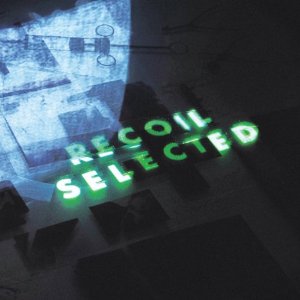
In 2010 Mute Records released a RECOIL compilation entitled Selected, and this was followed by a successful world tour. In February of the same year Wilder made a surprise appearance onstage with his former bandmates DEPECHE MODE for their Teenage Cancer Trust show at London’s Royal Albert Hall, to the unsurpassed delight of the fanbase. His appearance prompted speculation in some quarters that a full reconciliation was on the cards. These rumours were further fuelled when Wilder reworked Sounds Of The Universe track In Chains for 2011’s Remixes 2 album.

Whatever the future may hold, ALAN WILDER’s place in electro royalty is already well established. In September, fans will be able to bid for their own piece DEPECHE MODE or RECOIL history, when Wilder auctions a large collection of his studio equipment, vinyl and memorabilia. The ALAN WILDER/DEPECHE MODE Collection auction will take place in September at the Zion Arts Centre in Manchester.

ALAN WILDER kindly took time out of his busy schedule to talk to The Electricity Club about RECOIL, DEPECHE MODE and his forthcoming auction.

You released a RECOIL retrospective Selected last year. With your albums each having a distinct artistic concept, was it difficult to choose a tracklisting that represented the work of RECOIL, yet acted as a cohesive listening experience?
Well – you could say that was the aim (or challenge) from the moment that Mute suggested putting together a collection. They told me they were planning a series of compiled albums for a number of their artists just to bring people up to speed, and when I realised there weren’t any restrictions, the collection idea started to appeal. I kind of knew it would be possible to create an album with continuity, atmosphere and pacing. My inclination was that it would mainly consist of material from the last three RECOIL albums -so while there is a decent cross section of RECOIL’s overall output, the Selected album is more about my own favourites rather than a ‘cater to all’ concept. It works well I think, and wasn’t particularly difficult to put together.

You’ve toured Selected Events all around the world now to an enthusiastic reception. But what initial apprehensions did you have when conceiving the RECOIL live show and how have you managed to overcome them?
My main worry would have been the perception of ‘live versus playback’. The show was always designed as an audio/visual presentation rather than an out-and-out live performance. The music was certainly tailored to work in the live arena, and was constructed specifically with that in mind. It intrinsically links with a synchronised film and I think it is clear from our set-up that we’re obviously not playing all the parts, but rather adding live elements and effects (which vary with each venue) to a prepared bedrock. Perhaps this is a more modern way to present music than the traditional 5-piece, guitar-drums-bass-synth-vocalist, which is something I wanted to avoid. As the tour continued, it became clear which aspects of the presentation worked better than others, and we have therefore adapted it to be a little more crowd-friendly along the way.

There’s a Telemark modular synth which you have on stage with you. How are you finding that to use and what does it add to the overall RECOIL performance?
I use any number of synthesisers during the events depending on what I can get a hold of at a given time – as long as it is a modular-type with an external signal input. This allows me to feed plenty of our sounds directly into the synth in order to affect them using resonance, filtering, attack and so on. I’ve only used the Telemark a couple of times and haven’t fully explored it.

You’ve played Back To The Phuture, Short Circuit Presents Mute and are now playing Vintage Festival. Bearing in my mind the battles you’ve fought in the past with the ‘real music’ brigade, do you think electronic based music has finally got the recognition it deserves?
I think electronic music has been recognised for a long time, but we do see more and more acts using film and computers within their ‘performances’, and in these modern times (with portable applications on smaller and smaller devices, even your phone), this is becoming more acceptable, even to the diehards. The boundaries between what is performed or programmed is much more blurred. Does it matter? Not really. The bottom line is the effect on the listener/viewer and the enjoyment and entertainment imparted.

You recently reworked DEPECHE MODE’s In Chains for Remixes 2. Why did you choose that track and what do you think you gave the track that wasn’t part of its original vision.
To help me decide which song to work on, I asked Mute to provide stems from several short-listed songs, so that I could listen to component parts and make a more informed decision. In the end I decided that In Chains could maybe benefit the most from my ‘treatment’, hopefully expanding the dynamics and overall power. I thought the song and the existing vocal performance was strong, and even though we ended up with two quite different versions I’m happy with the results.

There is to be a sale of memorabilia and equipment from your career in September through Omega Auctions which focuses mainly on the years between 1982 to 1995. How has this come about?
It began as a small sale of studio equipment and grew into something much bigger when I realised that the process of selling multiple items can be quite complicated. It therefore made sense to maximise everything (in one hit so to speak), so we expanded the consignment to include all kinds of memorabilia. As I got deeper into the process, even though complicated, it actually became strangely enjoyable – to go back through all the years worth of collectibles and review what they all meant etc. The end result will be, I hope, a very exciting event in Manchester, to include workshops, a talk, a documentary film, perhaps even a performance and some other interesting things for the fans.


What do you think is the most unusual item on sale and the story behind it?
I think that would have to be the unreleased box set known as DMBS 1-4. Thought of as the ‘Holy Grail’, these are 4 extremely rare white labels from a DEPECHE MODE boxset that was never released. The proposed set was recalled for unknown reasons. Who knows why? The 4 test pressings were made and sent to me for approval in 1988.

Among the items for auction are several of your vintage synths. Are there any memories associated with particular ones that you can tell us a few anecdotes about, like for example the Minimoog, the ARP Odyssey or Oberheim OB8?
The Minimoog was my first synthesiser bought around 1977, pre-Mode, when I was a member of DAFNE & THE TENDERSPOTS. It was a big deal for us at the time as it was quite expensive and we couldn’t really afford it until we secured our record deal. It is still probably my all-time favourite synthesiser due to the famous fat 3-oscillator sound, and of course it’s an absolute classic. I continued to use it for many years on early Mode recordings such as Contruction Time Again and Some Great Reward and even had a MIDI update added during the 80s.

I bought the ARP in the late 70s privately in London and this also featured on quite a few of my pre-Mode recordings with various bands. I guess I always had a soft spot for the Minimoog but once you accepted that the ARP was never going to sound as ‘fat’ and realised that it could be used as a completely different kind of tool, then it came into its own. MIDI upgrades were added later when I used the ARP on some of the earlier RECOIL recordings such as Hydrology and Bloodline. I can’t pretend I was ever a skilled operator (unlike Daniel Miller for example) but it is certainly a lot of fun to fiddle about with.

To my disappointment, when I powered the OB8 up recently, I couldn’t get an actual sound although I’m told that it is just the voices which need attention. I was surprised as it has been looked after well and, cosmetically, it’s in superb physical shape. I used this synth during my time with REAL TO REAL and THE HITMEN in the early 80s. It has a fat, warm sound and was my first polyphonic synth. I loved the fact that I could actually store patches for the first time and it introduced me to the Oberheim sound which has a unique quality. I have been a fan of Oberheim ever since.

There’s a EDP Wasp in there too. There was an article featuring producer Dave Bascombe which said that you used it on Music For The Masses?
Yes, that’s true, it was used to create the famous bass sequencer parts in the Aggro mix of Never Let Me Down Again. I think we used the Wasp and Spider sequencer and then probably sampled the result, as it isn’t MIDI controllable. We may have been able to sequence it using cv/gate – I can’t quite remember.

What has been your favourite piece of equipment over the years?
In the studio, I’ve always loved my 1970‘s Neve console, Roland space echo, Manley amps and compressor, VCS 3, Minimoog and Oberheim synths… I have plenty of other gear but it’s largely redundant. My needs are quite simple these days: Logic Audio, Ableton Live, plenty of plug-ins. I now work on a MacBook Pro so I’m much more portable these days, finally making music on the move (at least sometimes).

If there’s a favourite all time DEPECHE MODE track here at The Electricity Club, it’s Halo. Could you tell us how you and co-producer Flood put together the palette of sounds that comprised the final arrangement?
From memory, the drums were sampled from LED ZEPPELIN’s When the Levee Breaks (but secondhand from a rap record). It is one of the most commonly used drum samples – for obvious reasons as it has that very special Bonham sound. The same snare drum sound appears on DM’s Get Right With Me. I’ve also heard that snare on a MASSIVE ATTACK record and many others. I think Violator was the first album that we used whole performance drum loops to create rhythm tracks, as opposed to programmed single drum sounds, and Halo was one of the first tracks we recorded for Violator in fact. Flood and I were listening to quite a lot of hip hop and rap records at the time – those artists were the forerunners when sampling larger sections of rhythms and grooves. And the unusual feels that were created on those albums really influenced Violator and Songs of Faith and Devotion.

Other sounds on Halo I’m more vague about, but we certainly would have used Flood’s ARP 2600 in conjunction with other modular synths to create the bass parts and other sequencer parts. For the end choruses, there are some string samples which I think were derived from Elgar. One of my techniques is to find sections of classical strings and transpose / stretch these, then add my own samples, in order to formulate new and unusual arrangements. This was a case in point. The DM track Clean utilised classical strings in a similar way.

How did that fabulous sequence on Waiting For The Night come together?
Waiting for the Night: the main sequencer part here was produced using the ARP 2600 synth and sequencer, because it has many flaws when setting up your 16 note sequence (for example tuning and gate length) – this makes for happy accidents and almost random events. We would have fiddled around with that sequence for a while, tweaking the filters and envelopes within the ARP until we arrived at that particularly hypnotic end result. The resulting sequence shape would follow any held note on a keyboard to transpose between the song’s basic chord changes as it ran, which we would then record, and that is essentially the spine of the whole thing. All the other sounds in that song act as mere embellishment. Each song is different though and we would employ a different approach to creating sequencer parts depending on what was appropriate.

Your surprise appearance with your former bandmates at the Teenage Cancer Trust gig in 2010 was a genuinely show-stopping moment, and became TEC’s Event of 2010. Were you surprised at the sheer scale of the welcome you received from the crowd? Do you have fond memories of the night?
Well, being there on stage felt strangely familiar – which is maybe not surprising considering how much touring we used to do – but it was like I’d never been away. I had forgotten just how it feels though when a large audience is behind you like that. A proud moment for me knowing that most people were so happy about it. It was great to see everyone (band and crew) and to catch up with their news, see how they were all fairing. The fact that is was for a worthy cause was also important of course, and I felt there would be a warm reaction from the people – which there definitely was :)

Over the years you have amassed a remarkable back catalogue with DEPECHE MODE and RECOIL. Which songs / albums from both eras are you most proud of?
Songs of Faith and Devotion is my favourite, and the tracks In Your Room, Walking In My Shoes and Never Let Me Down Again amongst others. No particular RECOIL favourites. Anything from Unsound Methods onward, really.

You commented on the prevalence of MP3 culture and the decline of the music industry to Side-Line Magazine in early 2008. Three years on, what do you think of the situation now and how it affects you as an artist?
Since then, there have been some marketing re-thinks for the better – a more tactile approach perhaps. We are seeing a return to higher quality formats, collectable editions, vinyl and so on. Mute have embraced the idea of limited editions where everyone can benefit – the consumer who gets total choice ranging from a simple download right through to the most luxury items, the artist who can indulge all his creative whims, and the record company who can charge the appropriate price for each product in order to make some profit (as long as they do not over produce and get lumbered with expensive stock). The music business is of course one of the fastest mutating industries and one has to try to understand why things adapt in the way they do. If the consumer isn’t particularly passionate and wants free music (which now seems inevitable amongst most listeners) then I’m not against the Spotify-type concept for example where, in effect, the artist receives his payment via advertisers.

Here at The Electricity Club, we celebrate the best of electronic pop music past and present. Are there any acts from the ‘new generation’ who you particularly admire?
Unfortunately, due to a complicated life (which seems to get more so by the day), I never find I have enough time to research and discover much new music but I enjoy trawling through my catalogue, built up since I was a teenager – and occasionally something new comes along to excite.

RECOIL’s sound is on the organic side of electronic with use of samples and influenced by trip hop, blues, and jazz. How do you see RECOIL developing in the future?
I have never undertaken a RECOIL project with a particular idea in mind, usually just a very vague notion. My approach is always both experimental and methodical so I just start throwing different sounds and loops together until I get a spark. I may say to myself that I’d like to work more with live musicians or perhaps not include too much spoken-word but these loose rules are never set in stone. I prefer to allow the music to flow completely naturally. Time will tell…

Fonte: The electricity club.

terça-feira, 1 de fevereiro de 2011 - 16:51

DJ Fletch | Martin, Vince e os Depeche

Andy Fletcher, deu inicio à 'DJ Tour' no passado dia 29 em Bucareste na Roménia. No Ark Club, onde actuou, Andy foi entrevistado pela UTV. Para além do cancelamento do concerto dos Depeche Mode na Roménia, em Maio de 2009, devido a problemas de saúde de Dave Gahan, Andy falou sobre o  álbum de colaboração entre Martin Gore e Vince Clarke que deverá estar concluído dentro de um mês. Falou também do desejo de que os Depeche Mode voltem ao estúdio este verão. Ficamos a aguardar  confirmação.

Nos últimos segundos da entrevista é possível ouvir uma remistura de 'Behind The Wheel'. Poderá ser a remistura de Vince Clarke, a editar no próximo álbum de remisturas dos DM?

sexta-feira, 17 de dezembro de 2010 - 15:38

Kerry Hopwood e os Depeche Mode

O produtor e programador Kerry Hopwood, em entrevista conduzida por Niels Kolling para o sítio The Black Hit Of Space, fala sobre do seu trabalho realizado com os Human League. Como Kerry tem uma ligação forte aos Depeche Mode as perguntas foram surgindo. É sobre os Depeche Mode a parte da entrevista que aqui se transcreve.
...
Being as big a fan of Depeche Mode, I have to sneak in some questions about the work you’ve done with Basildons finest. Congratulations on the brilliant job you did as musical director on their recent tour. I went to the Berlin, Copenhagen, Bremen, Paris and Horsens gigs and it kept getting better with the 2 latter ones the highlight for me.
Thanks for the kind comments about the DM tour, I think we were in a good place and by all accounts the feedback has been positive about the sound and look of the show plus I think Dave were putting in some great performances.

Really glad you enjoyed the shows in Paris, the boys certainly enjoyed them as the crowd were so enthusiastic even though Martin was quite ill on the first night, he still pulled off a good gig.

Horsens seemed very dry sounding, I guess due to the size but not too bad to work with.
Working as musical director on DMs last 2 tours, how involved are you in the pre-production of the live tracks? Are you programming what the band tell you to or do you have creative input as to what bits to extend or remix?
Well there is a long list of potential songs that we start out with and then I work by myself getting those together and then we'll get together a few weeks later and try and get it down from say 40 to 30 so I can concentrate on them more and then I'll do another stint before we go into rehearsals.

It is very loose with what to do, there may be suggestions about a direction for a track but on the whole I just get on with it and make of it what I want but I don't ever want to go too off piste with their stuff as I think sometimes it can alienate audiences when tracks become too overworked or vastly different. My main aim is at some point to have prepared the definitive version of a DM track for live.

This time around I remade a lot of the sounds so that sonically it would sound better than before and also changed the way I work with Christian with regards sound processing plus giving Pete sounds he can manipulate on synths rather than samples from the record, which was how it used to be done due to the complexity of DM recordings.

Any track that was particular interesting to deconstruct for live programming?
I think Photographic is the most fun in a way as I did that, just how they would have done it with three synths and a drummer (machine).

You also worked as programmer on the Ultra album, so how did Depeche Mode do things differently in the studio compared to The Human League?
Very similar in fact - Philip and Martin come in with songs and whether we go about things in the right way or the wrong way is another discussion but we tend to get into the studio, have our take on what we want to do with a track and just crack on with it.

So you may even not hear anything for a few hours as we're all beavering away on headphones but the we all emerge and start throwing sounds, parts, ideas together etc.

It is a bit of an isolated way of working at times but it is really because we just want to get as many ideas out for the project in the time frame and getting good sounds, for instance, is never a quick process.

Of the songs you've worked on with Depeche Mode my favourite track is Sister of Night and I was chuffed to bits as it was introduced in full band version on the recent tour. Just mindblowing! Any memories of making this cracker in the studio?
It is one of my favourite's too. Lot's of memories about this one, some a bit painful I'm afraid to say as it was a difficult time for the band but we got there in the end with Sister.

We had done an initial recording session in London and then moved all the gear over to work at Electric Ladyland in New York for a month or so. Sister, in the form you know it as now, emerged from this session.

The demo was really like a Bill Withers track, you like "Lovely Day" very nice but one day, we took it in another direction as that is what you do with DM tracks, deconstruct the song and rebuild with noises. Dave Clayton came up with most of the parts on this and I just did the drum programming to his amazing stuff.

The painful memories of this track were that Dave was not very well at the time and as Q and I were left to do the vocals, it was a very hard emotionally as Dave was trying his best to sing but was clearly not well enough to do so.

In the end the vocals took many days to do and I ended up comping (making lines of songs from words and syllables) as best I could and patching it together as best I could from the many, many takes we had. In the end, I doubt many people would hear what it took to get that vocal, which is good in a way.
Did it cause any problems as you programmed it for the tour?
It was a delight revisiting the track just to hear the sounds again in isolation.

I'm a little surprised that Depeche Mode didn't play more songs from the Sounds Of The Universe album on the tour, especially gems like Perfect, In Sympathy and Corrupt. So were they programmed and rehearsed?
Yes, we actually rehearsed more stuff off the new album than before except Perfect (much to my dismay) but as the band said, sometimes there are songs that, with the best will in the world, just don't seem to lend themselves to being done live.

My favourite from the SOTU sessions are Oh Well. Would love to hear it live with Martin, Dave and Fletch moved to the front with a couple of synths, dim the lights, turn on the stroboscopics and let it rip. Could create a club vibe in a stadium! Can you see its live potential?
Maybe you should come and do the next tour with them Niels.

Listening to Depeche Mode live a hundred times in a row sounds like a wet dreams to die hard DM fans. So are you able to enjoy the show while you're working?
I really enjoy working on all my live shows anyway but with DM it is always special, they are a great band, great fun to be with.

We have, in my opinion, the best front man out there plus added to the fact that each night's DM audience are quite often heads and shoulders above other audiences, there is never a feeling of Groundhog Day.

Any favourite live tracks?
I think my favourite live tracks are when Martin gets up with Pete and then either Never Let Me Down or Stripped.

You were also heavily involved in the production of the Live In Barcelona CD and DVD that has just been released to sum up Tour Of The Universe?
I mixed the live DVD for the SOTU tour with Antony King our sound engineer and I really enjoyed my time back in the studio.

The band were not happy with the mixes that the first guy had done so right after the tour I went in to start some prep work at my studio and then we mixed for a two week period with Antony our FOH guy and then after some comments from the guys I made the tweaks and then did the 5.1 mix.

We mixed it up at Alan Moulder and Floods studio in London and it was a lot of fun, hard work at times I admit but I am looking forward to it's release and hopefully a favourable reaction to what we did as I tried to get over what I think the show should be like with plenty of atmosphere rather than some of the clinical, clean and dry DVD's some bands ending up sounding.

You did a brilliant job as the sound is simply awesome! It's No Good, Jezebel, Never Let Me Down Again and Sister Of Night are some real hightlights. Found lots of new details I didn't noticed at the gigs, real goosebump moments!
I really appreciate your kind words for the DVD.

It is always a bit difficult to please everybody, but I just tried to do what I thought was right for this project (as it is the only way I know how to do things really) as the previous attempts just didn't sound very exciting or how I heard the gig so that was why we took over.
...
Ler a entrevista completa aqui.

Vídeo de Kerry a demonstrar como se faz o processamento da bateria num concerto dos Depeche Mode.

quinta-feira, 10 de junho de 2010 - 16:06

RECOIL | Alan a arma secreta dos DM

A relação de Alan wilder com os ex-companheiros transformou-se numa boa relação sem problemas. O que é que Alan tem a ver com Nitzer Ebb e The Cure? – entrevista realizada por David Medsker (10 de Maio) e publicada no bullz eye (7 de Junho) com o título ‘Recoil's Wilder was Depeche Mode's secret weapon’.

///

He only wrote a handful of songs, none of which were released as singles, but one could make a hell of a case for Alan Wilder as the man who made Depeche Mode great. As the band’s sonic architect during their glory years, Wilder pushed the band into darker, experimental territory, but perhaps his most well-known accomplishment is when he took a gentle ballad of bandmate Martin Gore’s called “Enjoy the Silence” and transformed it into a dance track, and subsequently a worldwide smash. Growing frustrated with doing the majority of the heavy lifting – and receiving little acknowledgement for his troubles – Wilder left Depeche in 1995 and put his energies into his solo project Recoil, which is about to release its first retrospective Selected and launch its first-ever tour. Bullz-Eye caught up with Wilder at his home in Sussex to talk about sampling blues over electronic beats well before that Moby chap, the upcoming World Cup, and how his old mates could use a swift kick in the ass in the studio once in a while.


Bullz-Eye: I know we’re here to talk about Recoil, but I have to start off by telling you that I sorely miss your contributions to Depeche Mode. They are just not the same band without you.
Alan Wilder: Thank you. I get that comment quite a lot, actually, which is always flattering, of course. It’s amazing how many people continue to say that to me after all these years. I guess a lot of people have a soft spot for that particular period.

BE: Well, there were a lot of different things that were clicking [then]. You were doing so much sonic experimentation, and those were Martin’s best songs as well.
AW: What you say about pushing [boundaries] and experimentation, that’s a lot of the problem with Depeche, you know. I always found, in the years I was with them, it was always my role to push for change. They’re very happy to settle into their own methods, and be comfortable within that. One of the great things about working with Flood was that between him and me, we insisted on pushing forward and trying to change things, and I think you can hear that in Violator  and Songs of Faith & Devotion more than any other albums. You can also hear that since then… [Pause] I think they’ve lacked really strong production. You know, a really strong producer who can take charge and not just sit there and get a nice sound, but someone that can actually say, “Yeah, this is okay, but you can do better. If you just push it a bit further, you can do a lot better.” That’s what they miss, I think.

BE: I couldn’t agree more.
AW: There are good songs [on the post-Wilder albums]. Martin’s always been a good songwriter, and that hasn’t changed.

BE: Recoil has not been terribly active the past few years. What made you decide to release a singles compilation now?
AW: Well, let’s not call it a singles compilation, because there aren’t any hit singles on it. It’s an overview, if you like, of what Recoil is all about, to try and bring it to a few people that may not know about it. In terms of singles, I can’t think of it in that way. I’m trying to think of it in terms of a cohesive album that makes sense when you listen to it. Not just a selection of tracks that you cherry-pick something from, but something you listen to all the way through and it makes sense. So that’s the reasoning behind it. And the project’s been going a long time now; it’s nearly 25 years old, so I think it’s not before time that we put something together like this. And I guess you can say I haven’t been that active, no. This is the first time we’ve ever played live, for example. And I never thought it was a project that was easy to take out on the road. It’s still not that easy, because of all the different singers, they live in different parts of the world, and they’ve got other commitments. So that’s not easy, but the thing that has become a bit easier is the availability of film, cheaper film potential, which I always wanted to do but could never really afford. So there are various reasons why we are now able, or I feel willing, to go on the road with it, as it were. But it still a different kind of presentation. It’s certainly not a live band.

BE: I was going to ask you about the tour, but now that you’ve brought it up, this is the first time you’ve been on the road since Songs of Faith and Devotion, right?
AW: Yeah. Sorry, I answered about ten questions in one there, didn’t I? (Laughs) It is the first time. I’m not a natural performer. I’m not like a Dave [Gahan] character that has to have his audience. I’m quite happy in the background, in a way. But having said that, I’m enjoying being out there, because I like traveling around and meeting people and all that stuff. So I’m quite happy to do it, and it’s been good fun. But this is much more like…a kind of presentation where we have quite a lot of pre-prepared music, and we do some live things over the top, but it’s tailored with venues and live audiences in mind. So they’re quite different versions to the records, for example. Much more stripped back, more minimal, more like a big remix, in a way. And the film is an important – more than important – part of the whole thing. It’s vital to making the whole thing have some focus and be interesting to people. Otherwise, there’s not much going on onstage, you know. So if we’ve got a good projection facility, then it’s really good.

BE: That’s interesting that you brought up film, because one of the things that I was going to ask you is whether you thought about scoring movies, because there is a very cinematic feel to a lot of the songs on this album. 
AW: It’s something I have expressed interest in. It’s not really happened as of yet. There have been some collaboration with film; Recoil’s music has appeared in a few different places along the way, but I’ve never scored a full movie. I guess it’s just a question of a good opportunity and the right combination coming along. Which may still happen. I’m open to that idea, yeah. It’s definitely something I could do, I’m sure.

BE: The song “Red River Cargo” sounds particularly interesting now, since it essentially beats Moby’s album Play to the punch by a good two years.
AW: Yeah, that’s true. There’s our album Bloodline, where we did a track called “Electro Blues for Bukka White,” which has sampled blues singing over electronic music, and was way before all that Moby stuff took off. So there you go. (Chuckles)

BE: You also managed to get Douglas McCarthy of Nitzer Ebb to actually sing on a record, instead of yell. Why doesn’t he do that more often?
AW: I guess Nitzer Ebb are lacking a lot of melodic content, you could say.

BE: There’s the understatement of the century.
AW: They asked me recently to do a remix for them, and I managed to find one track on their new album that does have some melodic content, and that was the one I chose to do. I think it’s a shame that they don’t have more melody, because they obviously have really good rhythmic ideas and good energy, and Doug is potentially a very good singer.

BE: Is there anything on Selected that you pitched to your former bandmates before deciding to record it yourself, or were these songs always meant to stand apart?
AW: No, none of these things were ever written before they were recorded in the studio, because…I can’t really write songs, to be honest. What happens is the songs evolve out of experiments in the studio, which is how I like it, because it’s a discovery process as you make the music. You never know quite where it’s going to lead to or where it’s going next. And it’s these aspects of making music that I really enjoy the most, these trial-and-error experiments where something happens that you didn’t expect and lead you to a new direction. Once I’ve got some music in place, I then try and find a vocalist or a lyricist to create the end result, which we could call a song, or we may not. It depends how it sounds; these are not conventional songs. In the early days, I tried to write songs much more conventionally, in a pop format. I did contribute a few to Depeche in those days, but I never was really happy with them.

BE: Your Wikipedia page states that you were invited to join the Cure in the mid-‘90s. True, or false?
AW: Um, 75% true. They never directly asked me. They asked Daryl [Bamonte], who was working for us at the time. Daryl’s brother actually ended up in the Cure, Perry Bamonte. Daryl used to work for Depeche and was very close to Robert Smith, and in fact he ended up working for Robert. Robert asked Daryl to ask me, “Would Alan be interested in joining us?” And of course I had just left Depeche Mode at the time, and the last thing I wanted to do was join any other band. I didn’t want to be in any band at all. I still don’t, in fact. So it was never going to happen.

BE: That would have been like another version of Electronic, you and Robert Smith in the same band.
AW: Yeah, it could have been a weird combination.

BE: I saw the video of your appearance with Depeche Mode at that benefit gig in February. When was the last time before that night that you had even played “Somebody” on the piano?
AW: Probably that afternoon. I played it a couple of days before, just to remind myself, but it’s not something I sit down and play every week, no. The interesting thing was, as soon as I played it again, it was like it had never been away; it’s kind of ingrained in my limbs, that song, because we’ve played it so many times over the years on past tours. It’s a very simple song to play anyway, so it didn’t take a lot of rehearsal.

BE: How are things now between you and the rest of the band?
AW: Pretty good, I think. We haven’t got any problems. I speak to Dave quite regularly, mostly by text or email. I don’t see so much of Martin and Fletch, but we had a very good chat that day. We met up before the concert, and I think everyone’s in good spirits and we have a good relationship. Martin’s in a great place at the moment. He’s been sober for four years or something, and he’s like a new person, completely different to how I remember him the last time I saw him.

BE: I love the story about how you transformed “Enjoy the Silence” from a ballad to a dance track. What other moments of studio wizardry are you particularly fond of?
AW: I think we were the most inventive on the Songs of Faith & Devotion album, going back to what I was saying earlier about working with Flood and pushing the boundaries a little bit. I can remember the first time we recorded “Walking in My Shoes.” It was the first, and possibly only, time the band has ever jammed together. We were never that kind of group; we just meticulously programmed music. Yes, there would be performance elements, but they tended to be overdubs and single-person performances. And Flood said, “Look, let’s just do something different.” We were getting nowhere; we had tried different ways of recording that track, and none of it sounded any good. So after the third or fourth time, Flood finally said, “Look, just all sit down, pick up an instrument and play something together.” And that was met with derision. “What? What are you talking about? Play together?” Alien concept to Depeche Mode. So Martin had a guitar, I had a bass, someone else had a tambourine, we had a little rhythm box going, and we just made this noise. And after that, we got the main groove for that song, the bass line and guitar lines. I’m not saying it was anything special. All I’m saying is that the process was so different and so unusual, and we did get a result from it, that I’ve got a good feeling about that. Again, going back to what I was saying, it was one of those moments where we did something different, and out of it came something very strong. I wish we had done more of that kind of thing.

BE: So you’re doing three dates in the US, and then you’re doing some dates in the UK. What are your post-tour plans?
AW: Well, we actually already did the London show. We have a date in Mexico and a couple of dates in the States, for now. And then we’re doing quite a lot of European dates. The idea was to do more [shows in the US] now, but it hasn’t really happened for one reason or another. So what we’re going to do is come back in October and play the rest of the US cities that we haven’t done this time. And South America as well, which we wanted to get to now, but the promoters have been a bit slow to get back to us, and we want to organize it really well. And it will happen; it’s just taking time. So that’s the plan, interspersed with the World Cup of football, which I know you’re not interested in, but we are. Actually, we’re playing you. We’re playing America. You didn’t know that, did you?

BE: I didn’t, but I guarantee you that one of our editors does.
AW: Yeah, we’re in the same group as the USA, so that’s going to be interesting. So I’ll have to take a break for that. That takes precedence over everything else. And we’ll come back in October, do a few more Recoil shows, and then I’m going to come up with some new music.

BE: Under the Recoil name, or something else?
AW: Under Recoil, yeah.

BE: Have you got people lined up that you’re going to collaborate with?
AW: Not yet. The way the music comes together, I never really know where it’s going, so it’s very difficult to pre-prepare. I just do the music and then find a singer.

BE: Well, that’s all the questions I have for you, so I’ll let you get back to dinner, or happy hour. Thank you very much for taking the time to talk with us. I really appreciate it.
AW: You’re very welcome. Good talking to you. Cheers.

sábado, 17 de abril de 2010 - 06:15

ALAN WILDER | Entrevista em Bucareste

«I haven't seen Fletch for a long time. I’ve seen Martin a bit more often and I talked to Dave a bit more via e-mail and things like that.»

«The problem with the major label is that when they take on board the whole Mute label, what they really want is Depeche Mode and Goldfrapp.»

«I was very impressed with Martin because he has been sober for four years and he is like a new person, someone I almost didn’t recognize

«I’ve always had moments when I think: “This is total shit, it sounds crap and I’m useless»


Mais uma interessantíssima entrevista a Alan WIlder, desta vez em Bucareste. A não perder.


quinta-feira, 15 de abril de 2010 - 07:38

ALAN WILDER | XXL

Para quem gostou do "post" anterior, fica aqui a versão "x-tra large" da mesma entrevista. Desta vez com cerca de uma dúzia de minutos a mais! Enjoy ;)

terça-feira, 13 de abril de 2010 - 00:31

ALAN WILDER | Quiz Musical

Interessantíssima entrevista a Alan Wilder, em jeito de "Quiz Musical". Entre outras coisas, ficámos a saber que Mr. Wilder já trabalhou com The Rubettes...! Apreciem.

P.S. Antecipadamente, pedimos desculpa pela "seca" da publicidade (antes e depois da entrevista propriamente dita terão que levar com 30 segundos da Wolkswagen) mas não somos nós que ditamos as regras ;)


OS DEVOTOS
RUI RAPOSO
DJWILD

SEGUE-NOS
Posts
Comentários
Facebook
Twitter
Flickr
Youtube
E-mail

LINKS
Anton Corbijn
Dave Gahan
depmod
Depeche Mode dot com
Depeche Mode TV
Home
Martin L. Gore
Mute Bank
Recoil

THE REFERRERS
Brava dança dos heróis
DJ WILD
DM Devotion D. Fan Club
El Mode Argentina
WorlDepeche Mode
Sweetest Perfection
©2012 dmportugal
Rui Raposo | Depeche Mode Portugal